
Featured Find
A rare round halfpenny of Henry I
Found near Petersfield in 2026 by a member who had taken up detecting six months earlier. Recorded with the Portable Antiquities Scheme as SUR-2AF7-8D1D.
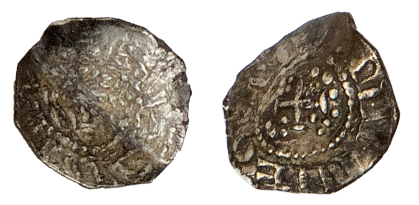
Cut halfpennies and farthings of the Norman kings (William I to Stephen) turn up reasonably frequently, but round specimens are extremely rare. Henry I was the first to issue round halfpennies, and at first this was only understood through written records of the time. A coin eventually surfaced in 1950, having been identified after being found before 1877 — and it stood as the only known example for more than 40 years.
With the advent of metal detecting as a hobby it was only a matter of time before further examples would be found, albeit it took until 1989, when four examples were found. Since then a total of 24 examples have been recorded, with each example being of great importance to numismatists.
This year, on a MWS dig near Petersfield, a new member of the group — who only started detecting six months earlier — had a day to remember. Late in the day he found a small hammered coin that looked unusual. The coin was slightly bent and the details hard to see, the obverse having been double-struck. He duly recorded the coin and was stunned by the expert report.
This is the 25th example of an extremely rare silver round halfpenny of King Henry I (1100–1135 AD), minted at Winchester by the moneyer Ailwine (also spelled Ælfwine or Æthelwine), featuring an uncrowned facing bust on the obverse and a cross potent reverse. It is only the second known example of this particular coin — mint and moneyer.
View the PAS record SUR-2AF7-8D1D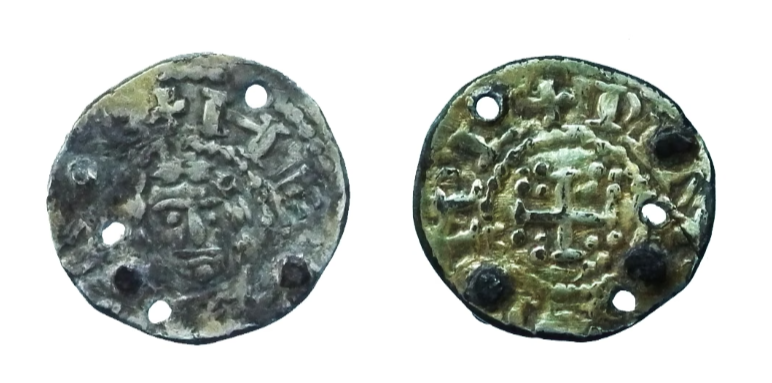
MWS has contributed to this corpus before.
Amazingly, Midweek Searchers has previously contributed to this limited corpus of coins. In 2015, at a dig near Wherwell, a round halfpenny was found that had been made into a brooch. The reverse of the coin had been gilded and pierced by six small circular holes, of which four are in line. At the time this was the 16th known example, and the first known Henry I round halfpenny of the Canterbury mint, by the moneyer Winedei.
View the PAS record SUR-D124DD